Chapter 1 - From Blackpool To Bomber Command
Born 15th November 1920 in Golborne, Lancashire; mother a weaver from Lancashire, and father a miner from North Wales. My family moved to Blackpool very early in my life.
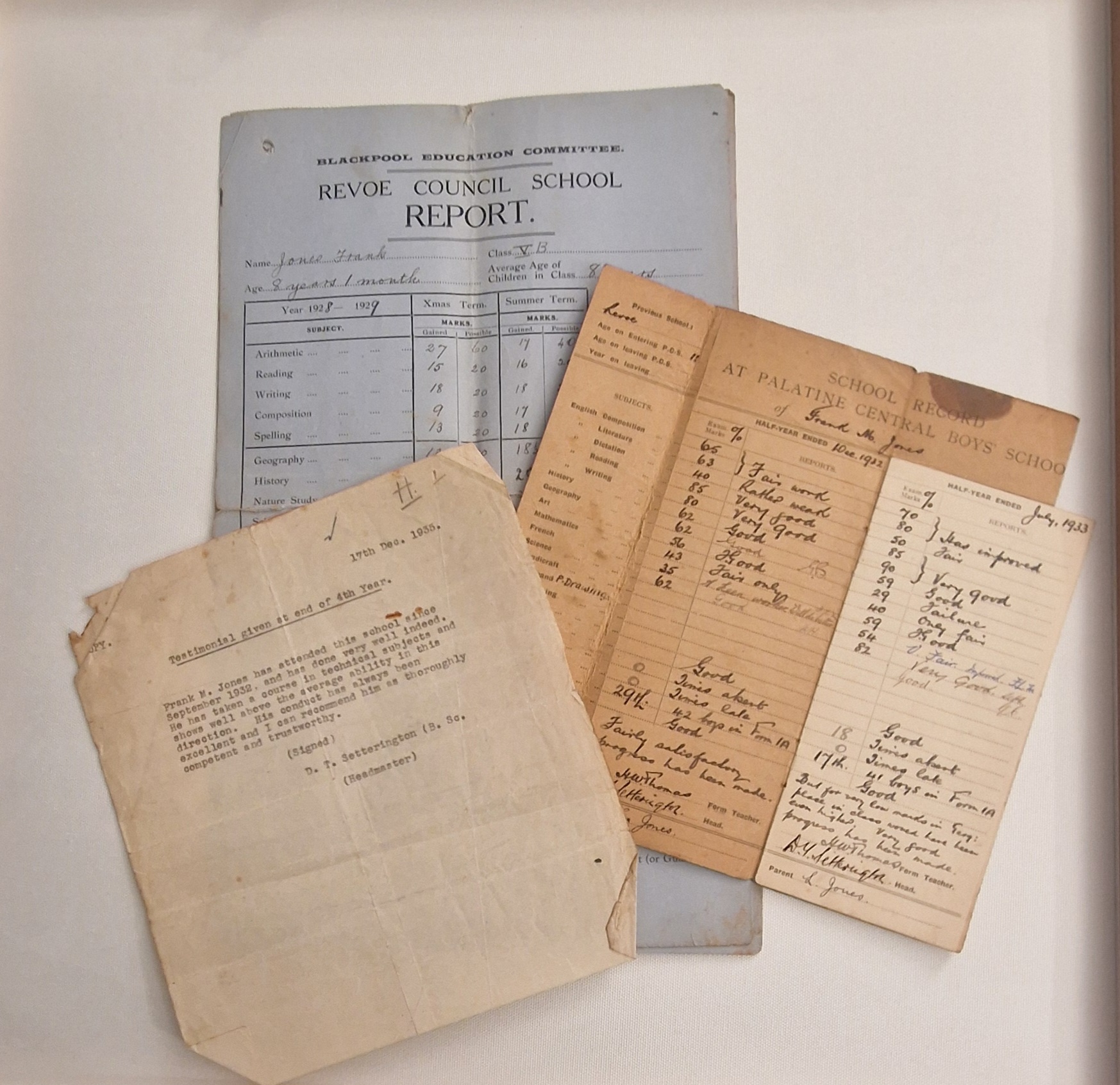
I went to Revoe Infants School Blackpool and then to Palatine Central School where I stayed until the age of 15 and regretfully left school without taking the School Certificate examination. During this period, I had a paper round and worked in Blackpool fairgrounds.
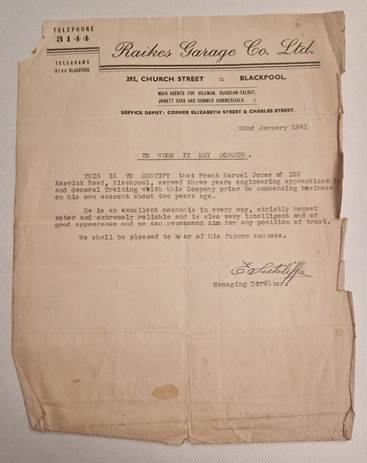
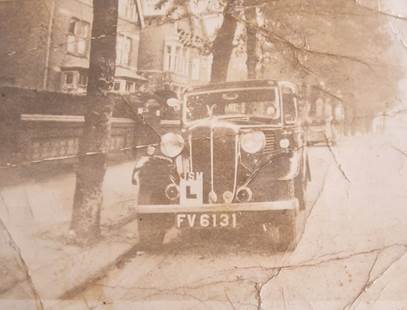
My father, who had been a miner, soldier, barber and lorry driver, had started the first motor driving school in Blackpool and in 1936, thought it a good idea for me to become an apprentice motor mechanic to gain a practical background before joining him in the business, so I worked for approximately three years in a garage.
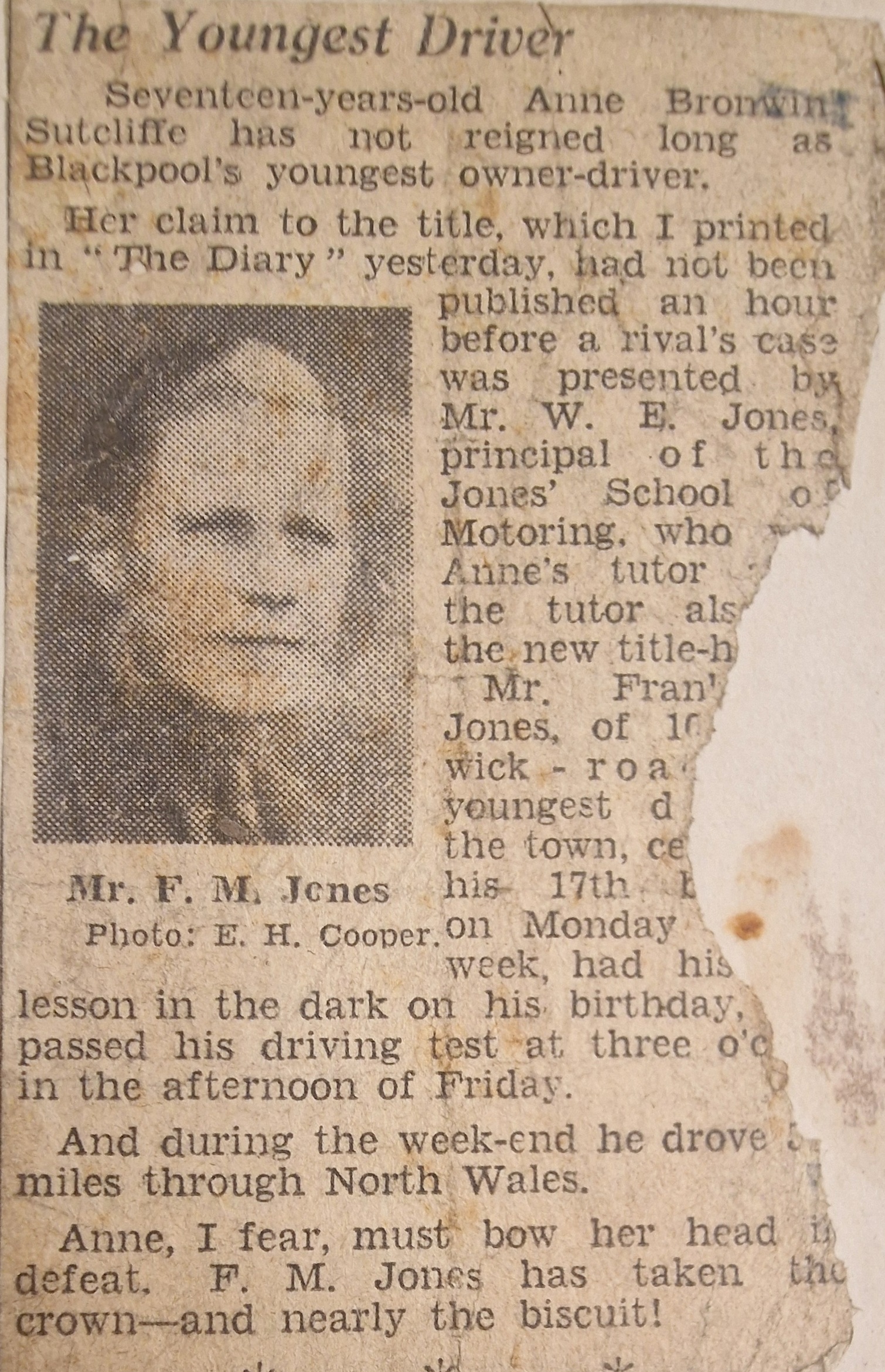
On my 17th birthday I passed my motor driving test and later started work in the family business as a driving instructor.
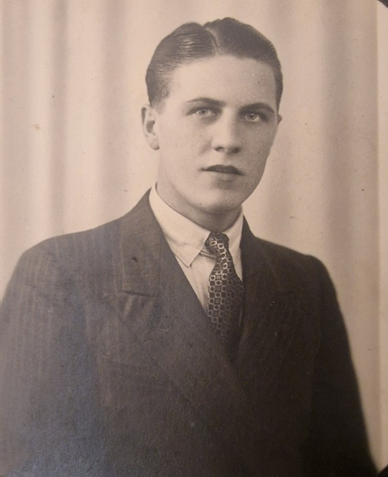
In 1940 I volunteered for the Royal Air Force and went to Cardington in November for interviews and tests. I was accepted for training as a pilot and was placed on deferred service.
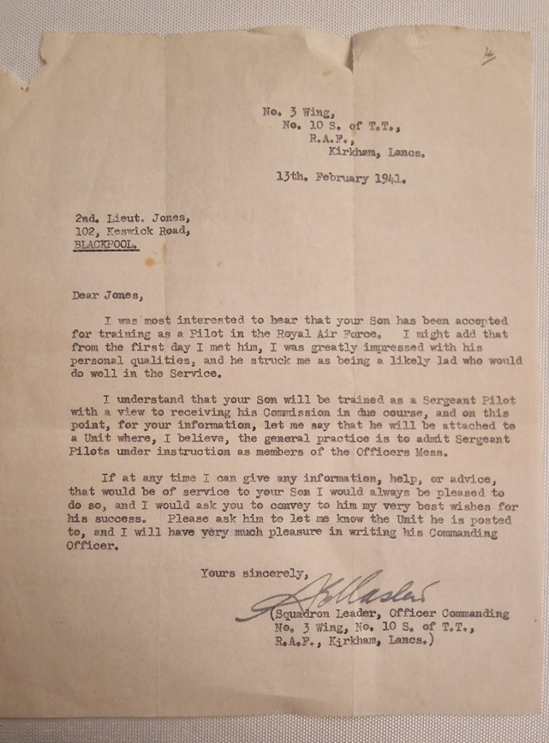
My father was commissioned in the Army, so I was left to manage the business until call-up in April 1941. During deferred service I did all possible to equip myself for service in the Royal Air Force because I wanted to be a fighter pilot.
I was a member of 1543 Squadron Blackpool Air Training Corps. The pilot and navigator of a Beaufighter, when on leave, were kind enough to give me lessons in navigation but these lessons ended when sadly my tutors were killed in action.
I paid for lessons in morse and could do 10 words per minute when I joined the Service, a good investment because I always came out top of the service tests. Mathematics was another subject I took privately. My hobbies at this time were ballroom dancing, smallbore shooting and weight training.
My motive for joining the Royal Air Force, in addition to patriotic reasons, was that I was interested in aviation and wanted to serve my country as a fighter pilot.
Your Country Needs You
At last, the call to arms in April 1941. Issued with uniform and given the rank of Aircraftsman 2nd class, the lowest form of life in the Airforce. The first posting was to a Pre-Initial Training Wing (Pre-ITW), in my case Babbacombe, Devon, where we indulged in our dreams of becoming pilots but were rudely brought down to earth by our immediate Gods – Corporals - who appeared at that time to have more influence and power than anybody. They were always immaculate, with razor-edge creased trousers and highly polished boots, and woe betide the poor airman who used the abbreviation Corp.
Drill, commonly known as 'square bashing', was the order of the day, and I well remember one Corporal who took our squad for drill. He would have us lined up in ranks and then say “I bin rahnd yer rooms this morning I 'ave, like s...holes they was; if I comes rahnd yer rooms termorrer morning and finds s... under yer beds, yer'll loose yer break I promise yer that! I saw yer grinning Smif, come out 'ere and I'll give yer somefink to grin abaht. Nah then! When I gives the word of command I wants yer to get fell in, in alphabetical order. Squad! Get fell in. 'Ere you, what's yer name. Phillips, eh? Well, ‘urry and get fell in with the rest of the F.....s”.
There really was not a lot to remember from pre-ITW days other than drill, physical training, kit inspections and Corporals, bless 'em, they had a hard exterior, bull-like voices, but hearts of gold, and were our first sustained brush with authority. I was now a number, 1199163 and earning the princely sum of 2/6d. a day, which was spent mainly on tea and wads (cakes) from the NAAFI.
My next posting was to Newquay in Cornwall, an Initial Training Wing (ITW). We lived in hotels which had been stripped of luxuries, and at the ITW, training began. The days were busy with rifle shooting and periods with other weapons, navigation, morse with key and aldis lamp, always foot and arms drill, physical training on the sands, meteorology, aircraft recognition, engines, and other associated subjects and guard duties, instruments and films. I found the navigation difficult, even though I had taken private lessons, and my first setback was when I failed the navigation examination and was put back a course to take it again. The class I had been with went to the United States as class 42B and I stayed behind doing guard duties and swotting for the navigation examination, which was to be in 6 weeks. I took the navigation exam and passed with good marks and became part of class 42C of the Arnold Scheme for training in the USA.
It was interesting, but hard work for me. I was fine if I had sufficient time, but of course the system was not geared to a slow student, which in all honesty, I think I was. We were entitled during training to wear a white flash in the front of the forage cap which denoted that the wearer was an aircrew cadet and by now I had reached the exalted rank of Leading Aircraftsman (LAC). The wings were still a long way off.
The only unusual incident during my stay at ITW was one that occurred during a lecture on various types of bombs. The instructor was explaining how this particular bomb worked; as it fell the vanes rotated, and he demonstrated this by turning the vanes with his hand. This, after a number of turns, fired the charge, and at this moment there was a loud bang, and he dropped the bomb which was empty of the main charge and we all ducked. Whether somebody had placed a small cartridge in the bomb for a joke we never did find out, but it was certainly a scare.
Even in our rough material uniform, we were fashion conscious, particularly as the Polish airmen were attracting all the girls, and we put this down to their wide trousers, which were 4in'. Our own trousers were very narrow, and the Service tailor did a roaring trade widening RAF trousers by putting an inset on each leg. Actually, I don't think the trousers had anything to do with the Poles pulling the birds - they were just smooth operators.
At ITW we were all issued with flying kit, heavy and cumbersome but we were impressed, and many photographs of fully dressed aircrew (no flying experience) went home to Mums, Dads, and girlfriends. We felt that we were that little bit nearer to winning the wings. We were all excited at the thought of going to the USA for flying training, and because America was neutral we had to go, ostensibly, as civilians. So civilian suits were issued, not much choice - dark grey or light grey, tailored by a well-known firm - I really think the Germans must have known what was happening.
A booklet on how to behave in America was issued to each cadet.
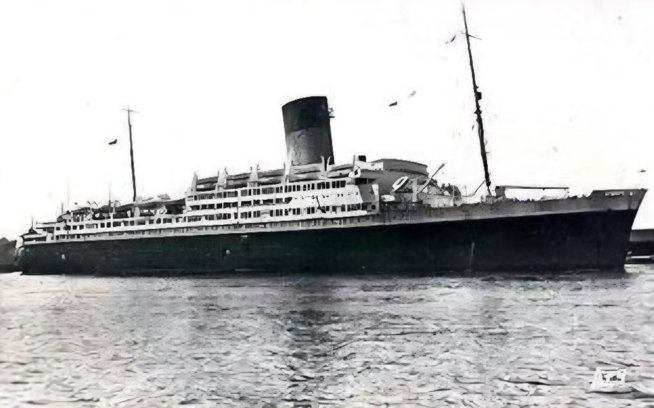
The cadets of Class 42C journeyed to Greenock with kit bags containing their worldly possessions and boarded the Stratheden in preparation for a voyage to Canada. We were packed like sardines in a tin, because the ship was crowded with forces. After days at sea we disembarked at Halifax, Nova Scotia, and then went on to Moncton, Canada. Later, we were billeted in the grounds of the Canadian National Exhibition in Toronto. Canada was sheer heaven - the food, after rationing in England, was marvellous, we made little pigs of ourselves for the short time we were there. It was normal to lay out uniform and kit on each bed ready for inspection, and all mine was stolen by someone - for souvenirs, for an enemy agent? I never did find out.