On this day in military history…
The Battle of Monte Cassino was one of the most brutal and controversial battles fought during the Italian Campaign in the Second World War. Lasting from January to May 1944, it became a symbol of both military determination and terrible destruction. At the centre of the fighting stood the ancient Benedictine monastery of Monte Cassino, perched high above the Liri Valley and overlooking the main route to Rome. Whoever controlled the heights controlled the road north.
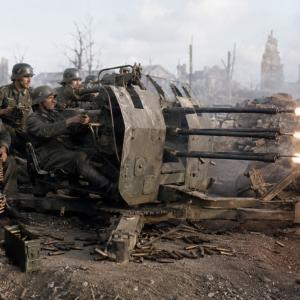
After the Allied invasion of Italy in 1943, German forces under Field Marshal Albert Kesselring withdrew into a series of powerful defensive positions known as the Gustav Line. Monte Cassino formed the anchor of these defences. The terrain itself heavily favoured the Germans. Steep mountains, narrow valleys, fast-flowing rivers and exposed slopes made every Allied advance costly. German paratroopers of the 1st Fallschirmjäger Division, among the finest troops in the Wehrmacht, dug themselves into caves, rocky outcrops and fortified positions all around the mountain.
The Allies launched their first attacks in January 1944. American forces attempted to cross the Rapido River while British and French troops attacked in neighbouring sectors. The assaults quickly turned into disasters. Troops advancing through mud and open ground were cut down by artillery, machine-gun fire and mortars from hidden German positions high above them. Thousands were killed or wounded for very little gain.
As the battle dragged on, attention focused increasingly on the great abbey itself. The monastery, founded by Saint Benedict in the sixth century, had survived centuries of war and upheaval. Allied commanders became convinced German observers inside the abbey were directing artillery fire onto Allied troops below. German commanders denied this, insisting the monastery itself was unoccupied, though German troops were certainly positioned all around its slopes and beneath its walls.
The question of whether to destroy the abbey caused deep argument among Allied commanders. Some believed it was a military necessity. Others warned that bombing such a historic religious site without definite proof would be a grave mistake. In the end, the decision was made to bomb it.
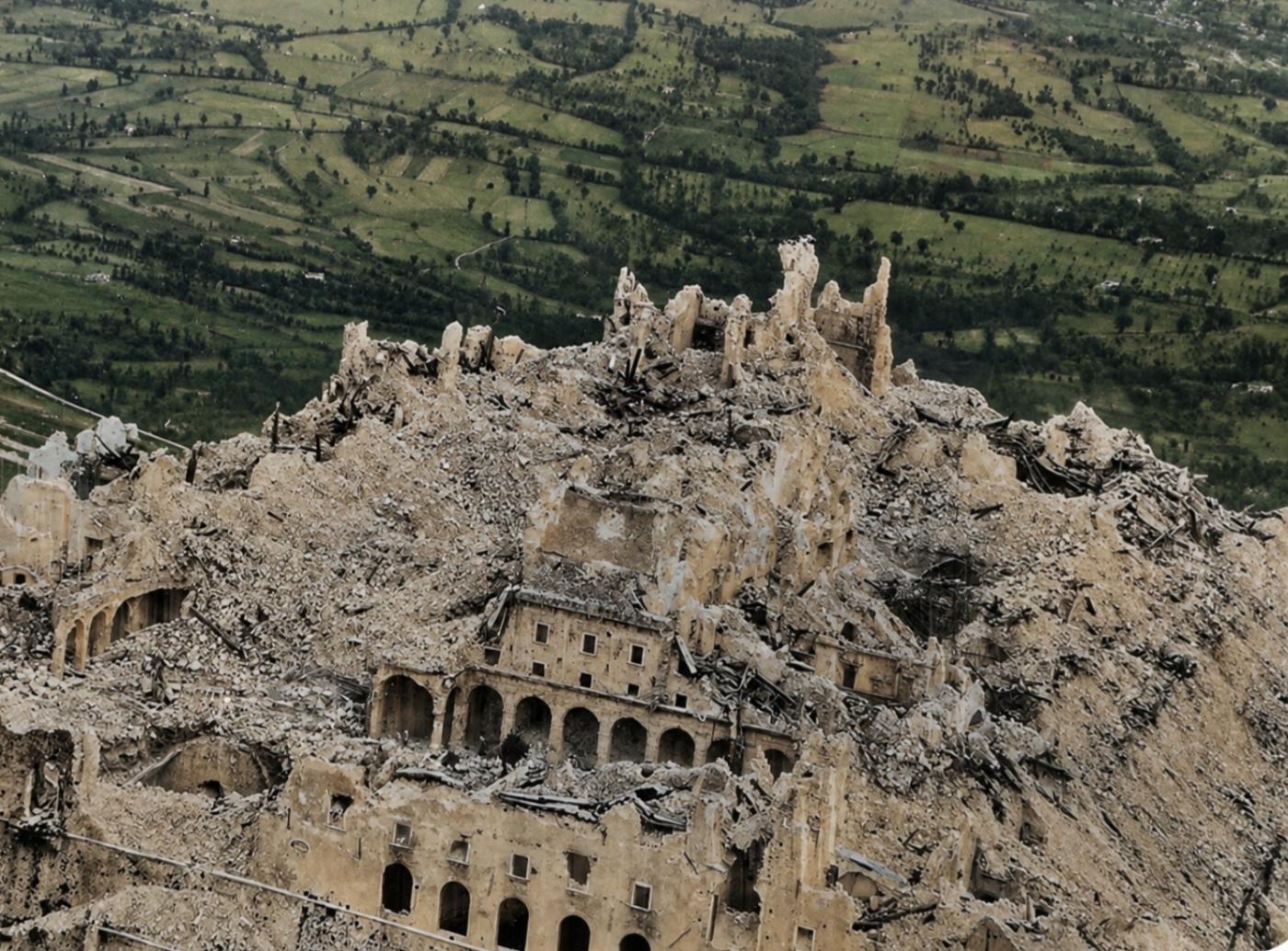
On 15 February 1944, hundreds of Allied bombers appeared over Monte Cassino. Waves of heavy bombers dropped enormous loads of explosives directly onto the monastery. Within hours the ancient abbey was reduced to a shattered ruin. Massive stone walls collapsed into heaps of rubble. Fires burned among the wreckage while dust and smoke drifted across the valley. Many civilians who had taken shelter inside were killed during the bombardment.
Ironically, the destruction of the monastery made the German defence even stronger. Before the bombing the abbey had offered limited military value as an occupied structure. Afterward, the ruins created perfect defensive positions. German paratroopers moved directly into the shattered remains and transformed the rubble into a fortress. Every broken wall and collapsed arch became cover from artillery and sniper fire.
Further Allied assaults followed in February and March. New Zealand, Indian and British forces fought desperately among the mountains and ruins but suffered terrible losses. Men fought at close quarters over rocky ridges with names such as Hangman’s Hill and Snakeshead Ridge. Rain, mud, exhaustion and constant shellfire turned the battlefield into a nightmare.
The final assault came in May 1944 during Operation Diadem, a massive coordinated Allied offensive involving British, American, French, Canadian, Indian, New Zealand and Polish forces. The crucial task of capturing Monte Cassino itself was given to the Polish II Corps under Lieutenant General Władysław Anders.
The Polish soldiers faced one of the hardest tasks of the entire Italian Campaign. They had to attack steep, exposed mountain slopes defended by elite German paratroopers who commanded every approach with machine guns and mortars. The first Polish assault on 11 and 12 May failed with severe casualties. Entire companies were pinned down or wiped out on bare rocky ground.
Despite the losses, the Poles attacked again several days later. Fighting became savage and often hand-to-hand among the shattered ridges overlooking the abbey. Units such as the 3rd Carpathian Rifle Division and the 5th Kresowa Infantry Division slowly forced their way forward. At the same time, Allied advances elsewhere along the Gustav Line threatened to outflank the German defenders, forcing them to begin withdrawing from Cassino.
During the morning of 18 May 1944, patrols from the Polish 12th Podolian Lancers entered the ruins of the monastery and discovered the Germans had withdrawn during the night. At approximately 10:20 in the morning, the Polish flag was raised over the shattered abbey, followed shortly afterward by the British Union Flag. After four months of bitter fighting, Monte Cassino had finally fallen.
The victory opened the road to Rome, which Allied troops entered less than three weeks later on 4 June 1944.
The cost of the battle was enormous. Allied casualties during the Monte Cassino campaign reached around 55,000 killed, wounded and missing. German losses were estimated at around 20,000. The Polish II Corps alone lost more than 900 killed and nearly 3,000 wounded during the final assaults.
The destruction of the monastery remained deeply controversial after the war. Many historians later concluded that German troops had not occupied the abbey before it was bombed, although they had heavily fortified the surrounding ground. Critics argued the bombing destroyed a priceless cultural treasure while providing the Germans with even stronger defensive cover. Others maintained Allied commanders acted on the information and pressures they faced at the time.
After the war the monastery was painstakingly rebuilt stone by stone using the original plans. Today Monte Cassino stands restored once more above the valley, while nearby war cemeteries contain the graves of thousands who fought and died in one of the most bitter battles of the Second World War.