Zippo Tank
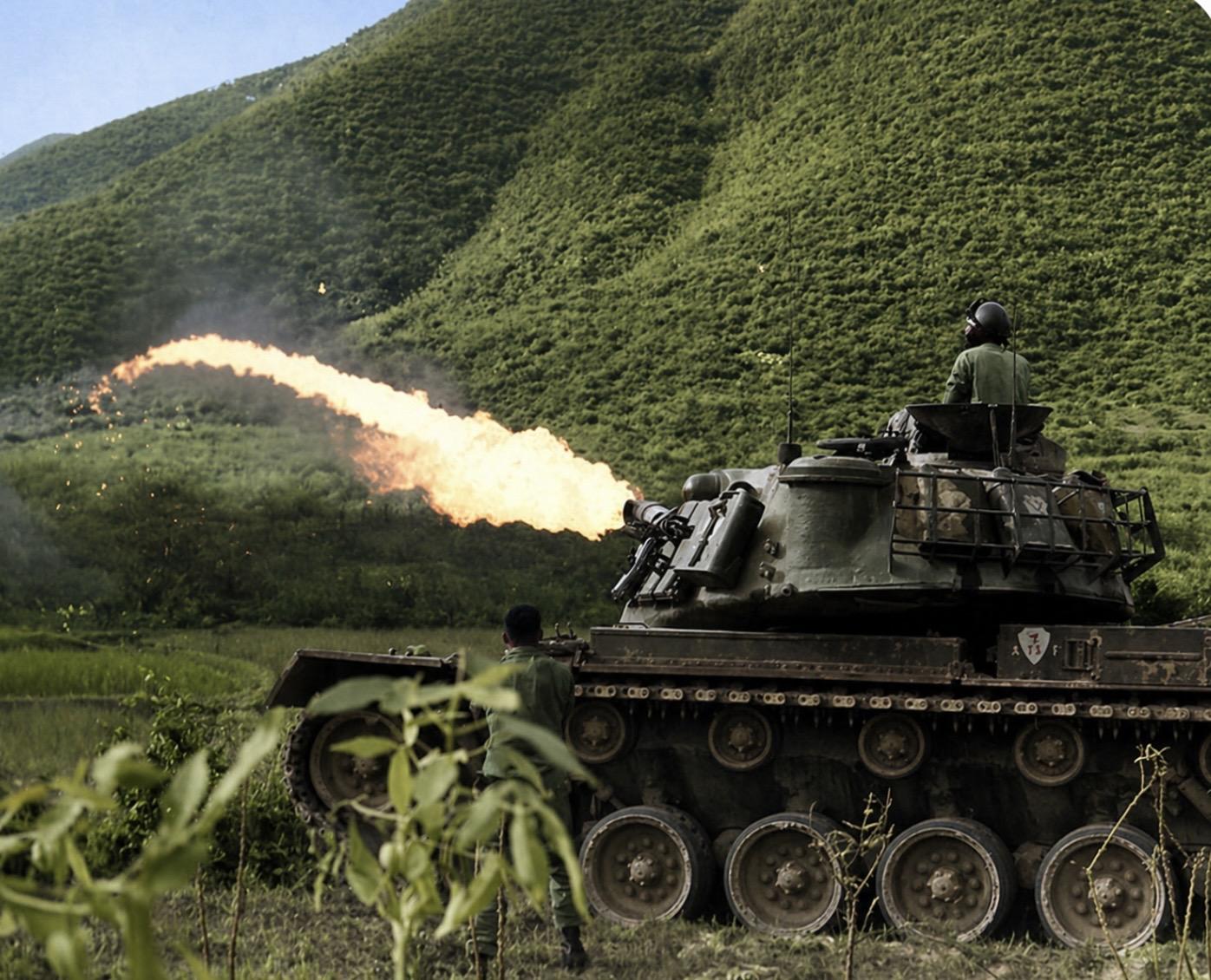
The M67 flamethrower tank, often nicknamed “Zippo,” was developed in the early Cold War after the United States Marine Corps saw how effective flamethrower tanks had been in the Pacific during the Second World War. When the Korean War exposed the limitations of older converted vehicles, the need for a modern, purpose-built design became clear.
It was designed in the early 1950s by the United States Army Chemical Corps, which specialised in flame and chemical weapons systems. Instead of creating a tank from scratch, engineers used the chassis of the M48 Patton, one of the main American medium tanks of the time. Production began in 1955, mainly at the Detroit Arsenal, with Chrysler involved in manufacturing and conversion work. It officially entered service the same year, though it arrived too late to see combat in Korea. Just over a hundred were built, with later versions improving performance and reliability.
The design was simpler than a standard gun tank. The usual main cannon was removed and replaced with a flamethrower, which meant the loader was no longer needed. This reduced the crew to three: commander, gunner, and driver. Inside the turret, space was taken up by a large fuel tank holding thickened fuel similar to napalm, along with pressurising equipment.
Its main weapon projected a stream of burning fuel over distances of up to about 250 metres. The flame could be sustained for close to a minute, depending on how it was fired. Ignition came from a spark system at the nozzle, and the whole unit was hidden inside a mock gun barrel so it still looked like a normal tank from a distance.
In combat, it was not used against enemy armour but for close support. It was especially effective against bunkers, trenches, buildings, and dense vegetation. During the Vietnam War, it proved valuable in jungle fighting, where it could clear cover and expose hidden enemy positions. The visual and psychological impact of its firepower was often as important as its physical effect.
The vehicle needed specialised support, including fuel resupply and compressed gas systems, which limited how long it could operate independently. Firing also created intense noise inside, making communication between crew members difficult.
It first saw action in Vietnam in 1965 and remained in service throughout the war, including in urban fighting such as the Battle of Huế. It stayed with the Marine Corps until 1974, when it was retired without replacement, becoming the last flamethrower tank used by the United States. The nickname “Zippo,” taken from the famous lighter brand, captured its ability to ignite targets instantly and became part of its lasting reputation.